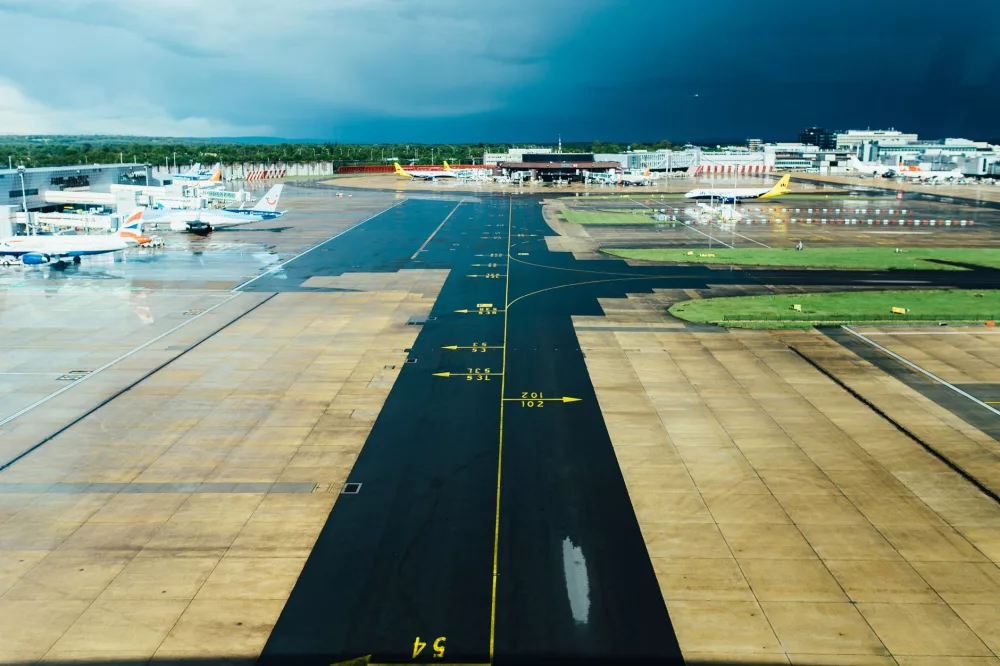
I think we've all been there, haven't we? That sinking feeling as you stare at the departure board, your flight time now flashing red, accompanied by the dreaded word: 'Delayed.' It's an all too common experience for modern travelers, a frustrating hiccup in what should be a smooth journey. Airport delays aren't just minor inconveniences; they can unravel meticulously planned itineraries, create significant stress, and even lead to substantial financial losses for both passengers and airlines. Understanding why these delays happen, and what we can do about them, is something I've spent a good deal of time thinking about as a frequent flyer.
The Complex Web of Causes Behind Flight Delays
When our flights are running late, it's easy to point fingers, usually at the airline or the airport itself. But the truth is, a flight delay is often the result of an incredibly complex interplay of factors, many of which are completely outside the immediate control of airline staff or ground crews. It's never just one thing; it's a cascade.
Weather: The Unpredictable Adversary
Let's be real, Mother Nature doesn't care about our flight schedules. Bad weather is, hands down, one of the biggest culprits. We're talking about everything from heavy rain and strong winds to snowstorms, fog, and even thunderstorms. A small localized storm at your departure airport can cause issues, but a major weather event at your destination or even at an airport thousands of miles away that your aircraft is coming from can throw things into chaos. Remember, planes don't just sit waiting; they're constantly moving across the network. If a plane is supposed to fly from London to New York, and then from New York to Chicago, a weather delay in London means that plane won't get to New York on time, thus delaying the New York to Chicago leg. It's a domino effect that's truly astonishing in its reach.
Here's what often happens:
- Visibility issues: Fog or heavy precipitation can make it unsafe for pilots to land or take off.
- High winds: Crosswinds can be particularly dangerous, forcing airports to close runways or reduce capacity.
- Snow and ice: These require extensive de-icing procedures, which take time and equipment, slowing down operations considerably.
- Thunderstorms: Air traffic controllers often have to reroute planes to avoid dangerous storm cells, lengthening flight times and increasing congestion.
Air Traffic Control (ATC) Constraints
Believe it or not, the sky isn't endless. Air traffic controllers play a critical role in managing the flow of aircraft in the airspace, and sometimes, the sheer volume of planes simply exceeds the system's capacity. When that happens, ATC might implement 'ground stops' or 'ground delays,' holding planes at their origin airport to prevent overcrowding at the destination or along busy flight paths. This isn't just about the number of planes, either. Sometimes, staffing shortages at ATC centers can reduce the number of flights they can safely manage. We're talking about highly skilled professionals, and a small reduction in staff can have a massive impact.
Mechanical Issues and Maintenance Checks
Safety is absolutely paramount in air travel, and that's something I think we all appreciate. Airlines adhere to incredibly strict maintenance schedules and regulations. If a plane develops a mechanical issue, no matter how minor it seems, it has to be addressed before it can fly. This often means delaying the flight to allow engineers to diagnose and fix the problem. Sometimes, it's a quick fix; other times, it requires parts that aren't immediately available, or a more extensive repair. While inconvenient, these delays are non-negotiable for passenger safety, and I'd rather be safe than sorry, wouldn't you?
Crew Availability and Duty Time Regulations
Pilots and flight attendants have strict limitations on how long they can work. These 'duty time' regulations are in place for safety, preventing fatigue that could compromise flight operations. If a previous flight is delayed, it can cause a domino effect on crew schedules. A crew might 'time out,' meaning they've reached their maximum allowable working hours, and a new crew must be found. Finding a replacement crew, especially last minute, can be incredibly challenging, leading to significant delays while the airline scrambles to reassign personnel.
Operational Challenges and Ripple Effects
Airports and airlines operate on incredibly tight schedules, like a finely tuned orchestra. Even a small disruption can send ripples throughout the entire system. Consider this: a delayed inbound flight means the aircraft for your outbound flight isn't at the gate when it should be. The gate might then be occupied, causing a delay for another arriving aircraft, and so on. Baggage handling can also be a factor; if ground staff are overwhelmed or equipment breaks down, it slows everything down. We've also seen how airline operational decisions, like combining two undersold flights into one, can cause delays for some passengers, even if it makes economic sense for the airline.
The Real Impact: Beyond Just Waiting
Airport delays aren't just about lost time; they have tangible and often painful consequences. For passengers, it can mean missing connecting flights, important business meetings, or even once-in-a-lifetime events like weddings or family emergencies. The stress and anxiety that comes with uncertainty can be overwhelming. Economically, the cost is staggering. Airlines lose millions in fuel, crew salaries, and compensation for disrupted passengers. Businesses reliant on air cargo face delays in their supply chains, potentially affecting production and sales. It's a lose-lose situation for almost everyone involved.
What Can Airlines and Airports Do?
It's not all doom and gloom; significant efforts are underway to mitigate delays. Technology plays a huge part here. Better weather forecasting models allow airlines to make more informed decisions earlier. Improved air traffic management systems are being developed to optimize airspace usage. Airlines are investing in more robust maintenance programs and better crew scheduling software to anticipate and react to disruptions more effectively. Things like pre-emptive de-icing procedures and enhanced ground support equipment also make a difference, especially in challenging environments. The communication aspect is also getting better; many airlines now provide real-time updates through apps, which, while not preventing the delay, at least helps passengers plan better.
How We Can Better Cope as Travelers
While we can't control the weather or mechanical issues, I've found there are several proactive steps we can take to minimize the impact of delays on our own travels:
- Stay informed: Always check your flight status before heading to the airport. Use airline apps or airport websites.
- Arrive early: This gives you a buffer, especially if security lines are long or there are unexpected issues.
- Pack essentials: Keep medications, important documents, chargers, and a change of clothes in your carry-on.
- Know your rights: Understand what compensation or assistance you might be entitled to under regulations like EU261 or your airline's contract of carriage.
- Book flexible tickets: If your schedule allows, choosing a flight with more flexibility can provide peace of mind.
- Consider travel insurance: This can cover costs for missed connections, accommodation, or other expenses due to significant delays.
- Be patient and polite: Remember, the gate agents are usually doing their best in a difficult situation. A little kindness goes a long way.
Ultimately, airport delays are an inherent part of air travel, a complex problem with no single solution. They're a powerful reminder of how interconnected and fragile our global transportation networks truly are. While we might never eliminate them entirely, by understanding their causes and taking proactive steps, I believe we can navigate the unpredictability with a bit more grace and a lot less stress.