What Exactly is a Hopper, Anyway?
You know, it's funny how often we encounter things in our daily lives without giving them much thought, isn't it? For me, one of those things used to be the humble hopper. I mean, at first glance, it just looks like a big funnel, right? But boy, was I wrong! When you dig a little deeper, you realize that a hopper is so much more than just a simple container. It's an indispensable piece of equipment, a true workhorse across countless industries, designed specifically to hold and facilitate the controlled discharge of bulk solids or particulate materials. Think grains, powders, pellets, or even chunky aggregates – if it needs to be stored temporarily and then moved, a hopper is probably involved.
Its primary function is to prevent material from just sitting there or bridging, ensuring a consistent, reliable flow into another process or piece of equipment. Without properly designed hoppers, imagine the chaos: blockages, irregular feeding, production downtime… it'd be an absolute nightmare! That’s why understanding these seemingly simple devices is actually pretty important, especially if you're involved in any industry that deals with bulk materials.
Dissecting the Design: What Makes a Hopper?
So, what exactly are we looking at when we talk about a hopper? Fundamentally, it consists of a body, usually tapering downwards, and an outlet at the bottom. But there's a lot of engineering that goes into getting that material moving smoothly. We're talking about specific angles, wall finishes, and discharge mechanisms.
Different Flavors of Hoppers: Not All Funnels Are Created Equal
I've learned that hoppers aren't just a one-size-fits-all deal. There are several key types, each optimized for different material properties and flow requirements:
- Mass Flow Hoppers: These are the gold standard, in my opinion, for many applications. They're designed so that all the material within the hopper is in motion when discharged. This 'first-in, first-out' characteristic is brilliant because it minimizes segregation, maintains a consistent bulk density, and stops stagnant material from accumulating. You often see steep, smooth walls here.
- Funnel Flow Hoppers: This type is a bit more common because it's simpler and often cheaper to build. With a funnel flow hopper, only the material directly above the outlet moves, creating a 'rathole' or channel. The material at the sides remains static, only falling into the moving channel when the material below it has been discharged. This can be fine for free-flowing, non-degrading materials, but it's a real headache for cohesive or segregating stuff.
- Expanded Flow Hoppers: These are kind of a hybrid. They combine a mass flow section at the bottom with a funnel flow section above it. It's a clever way to get some of the benefits of mass flow (like preventing bridging at the outlet) without the full cost of an entirely mass flow design.
Beyond these, you'll also find specialized designs like vibratory hoppers, which use vibrations to encourage flow, or agitated hoppers, which literally stir the material to keep it moving. It's pretty amazing how engineers adapt these basic concepts to solve complex material handling problems.
Where Do We See These Marvels? Hoppers Everywhere!
Once you start looking, you'll see hoppers absolutely everywhere. They're truly ubiquitous!
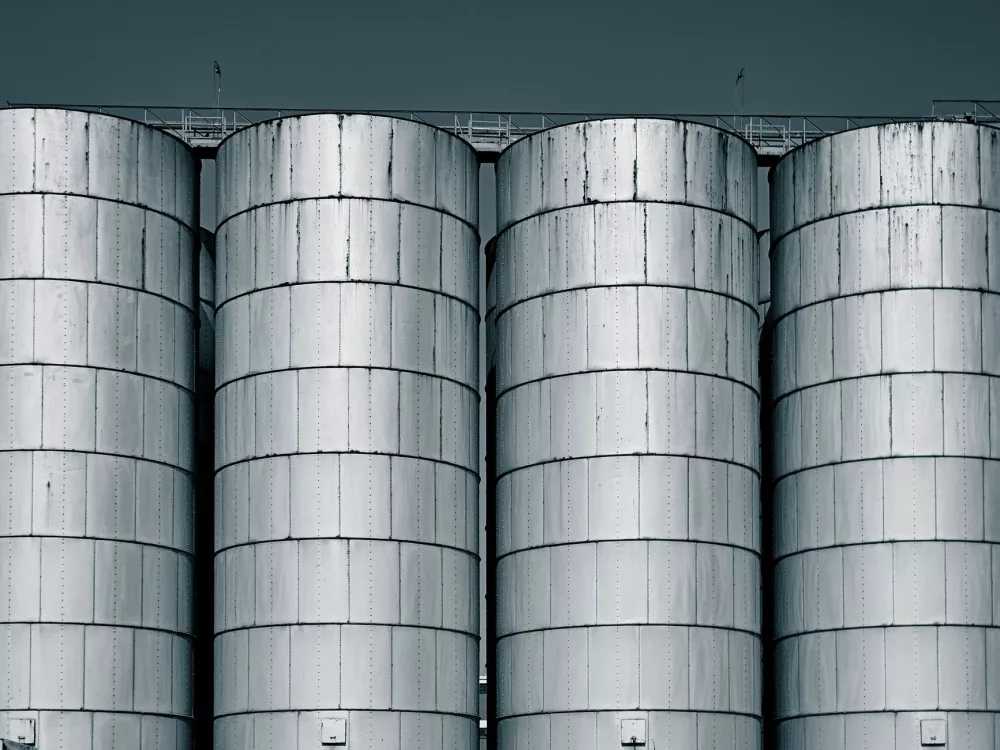
- In agriculture, we use them for storing and dispensing grains, animal feed, and fertilizers. Think about those huge silos; often, the bottom section functions as a hopper.
- Manufacturing relies heavily on them for dosing powders, pellets, and granules in processes ranging from plastic molding to chemical production. I've seen them feeding precise amounts of ingredients into mixers.
- The construction industry couldn't operate without hoppers for handling cement, sand, gravel, and other aggregates. Batch plants are full of them!
- In food processing, hoppers ensure hygienic and controlled dispensing of ingredients like flour, sugar, coffee beans, and even processed foods. We need to be super careful about contamination there.
- The pharmaceutical sector uses incredibly precise hoppers to feed active pharmaceutical ingredients (APIs) and excipients into tablet presses or encapsulation machines. Accuracy is key.
- Even in mining and waste management, hoppers play a role in moving vast quantities of ore, crushed rock, or refuse.
Honestly, the list goes on and on. If you're moving bulk solids, you're probably dealing with a hopper.
The Nitty-Gritty: Critical Design Considerations
Designing a hopper isn't just about making a big funnel; it's a science. I mean, we really need to consider several crucial factors to ensure smooth operation:
- Material Flow Properties: This is probably the biggest one. Is the material free-flowing like sand, or is it cohesive and sticky like wet clay? Does it compact easily? Does it degrade over time? These characteristics dictate the hopper's geometry.
- Wall Angles and Friction: The angle of the hopper walls needs to be steeper than the material's angle of repose and its wall friction angle to ensure consistent flow. Smoother wall materials, like polished stainless steel, reduce friction, encouraging material to slide.
- Discharge Opening Size and Shape: The outlet must be large enough to prevent arching or bridging, where the material forms a stable arch over the opening, stopping flow entirely. It also needs to be compatible with the downstream equipment.
- Construction Materials: The choice of material for the hopper itself is vital. Stainless steel is common for hygiene and corrosion resistance (think food or pharma), while carbon steel might be fine for less sensitive industrial applications. Sometimes, we even use special liners made of UHMW-PE to reduce friction or abrasion.
- Environmental Factors: Temperature, humidity, and the potential for corrosion or abrasion all play a role in material selection and overall design.
- Safety: Ensuring operator safety is paramount. This includes features like proper guarding, access points for cleaning, and dust control measures, especially with fine powders.
When Things Go Wrong: Common Hopper Problems and Solutions
Despite careful design, hoppers can still encounter problems. I've certainly seen my share of headaches!
- Bridging and Arching: This is when the material forms a stable arch across the hopper outlet, completely stopping flow. It's often caused by cohesive materials or an outlet that's too small.
- Ratholing (or Piping): With funnel flow hoppers, this happens when a channel forms directly above the outlet, allowing only a portion of the material to discharge, leaving stagnant material on the sides.
- Segregation: Different-sized particles can separate during filling or discharge, leading to an inconsistent product mix. Mass flow hoppers are much better at preventing this.
- Wear and Abrasion: Abrasive materials can wear down hopper walls over time, compromising structural integrity or introducing contaminants.
- Contamination: If not properly designed for cleaning, residual material can lead to product contamination, especially in sensitive industries.
The good news is that engineers have developed numerous strategies to combat these issues, like using vibrators, air cannons, specialized liners, or even incorporating agitators right inside the hopper. Sometimes it's as simple as optimizing the wall angle or changing the outlet shape.
My Final Thoughts on the Hopper's Impact
Honestly, thinking about it now, the hopper is truly an unsung hero in industrial processes. We might not always notice them, but their proper function underpins so much of modern manufacturing, agriculture, and infrastructure. It’s not just a box; it’s a carefully engineered system that keeps materials flowing, production lines running, and businesses thriving. So next time you see a giant funnel or a specialized bin, take a moment to appreciate the complex engineering and critical role of that indispensable hopper. It really does make the world go 'round, doesn't it?